Featured in Kazi Magazine · January 2025
40 Days of Island
Hopping the Caribbean
March–April 2024. Three crew, 600 nautical miles, 17 islands — from Grenada to the US Virgin Islands aboard Arona.
March–April 2024. Three crew, 600 nautical miles, 17 islands — from Grenada to the US Virgin Islands aboard Arona.
Paul splits his time between the US and Japan, and started sailing while living in Japan. Ever since he learned, a circumnavigation was always on his mind. He progressed from a Yamaha 30C to an Elan 34 in Japan, then continued sailing in the Pacific Northwest after moving to Seattle. But for the dream of sailing around the world, he needed something bigger.
In 2019, he found a Hallberg-Rassy 40 for sale in Grenada. "Grenada is the best departure and return point for a circumnavigation. The trade winds blow year-round, it's well-suited for cruising, and from there you can ease into the bluewater life." He purchased Arona and began preparing her for the voyage ahead.
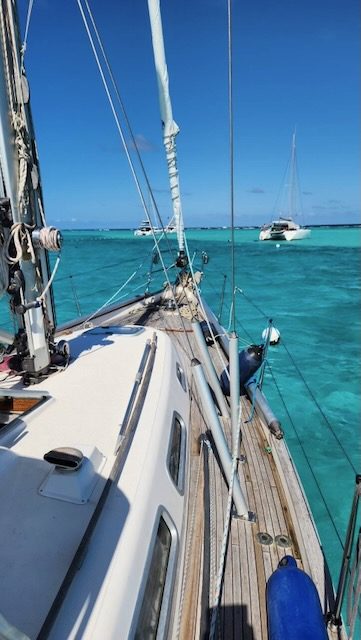
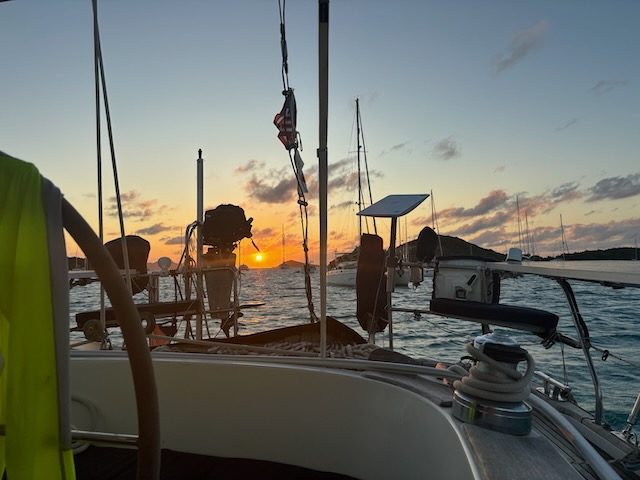
The Caribbean cruise was born from a Facebook post. Paul recruited crew — Kawabata, who flew from Japan, and Linda Saza — and the three set off from Grenada on March 3, 2024. Some days they covered as little as 5 miles; others as many as 50. The pattern was simple: anchor in a bay, row the dinghy ashore, explore, eat at local restaurants, meet other cruisers, and move on.
They sailed the western side of the island chain, where the Caribbean's prevailing easterly winds are gentler. "Waves and wind come from the east, so the west side is calmer. But you still get plenty of breeze." Sparkling blue seas, clear skies, and the steady push of the trades carried them north from island to island.
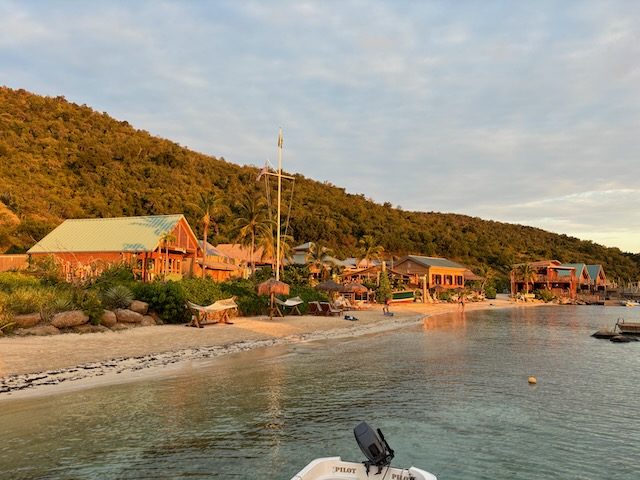
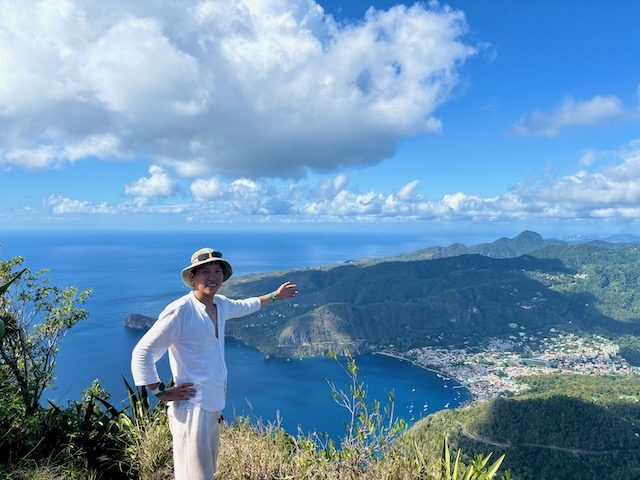
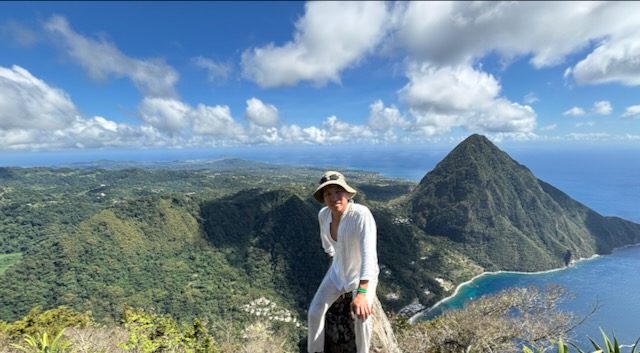
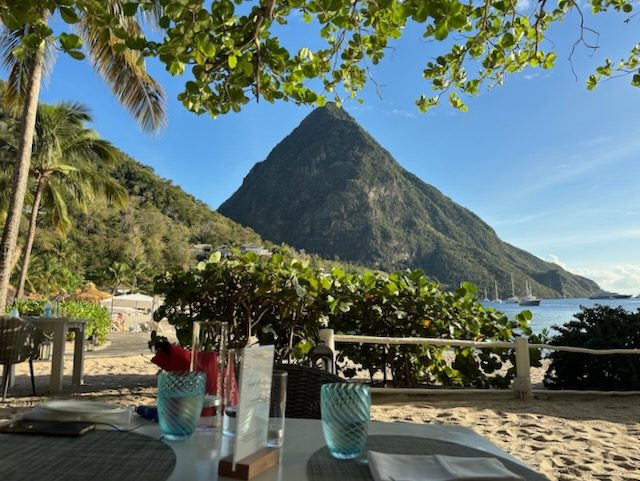
St. Lucia was one of the most dramatic stops on the entire route. The twin volcanic peaks of the Pitons — Gros Piton and Petit Piton — rise straight out of the Caribbean like green cathedral spires. Paul hiked both, taking in views that stretched across the entire island chain from their summits.
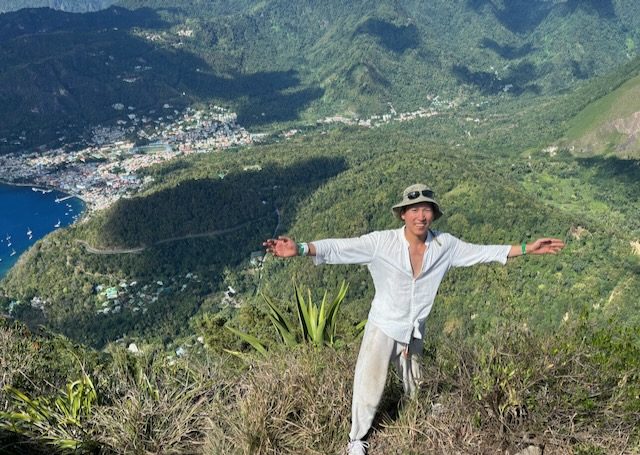
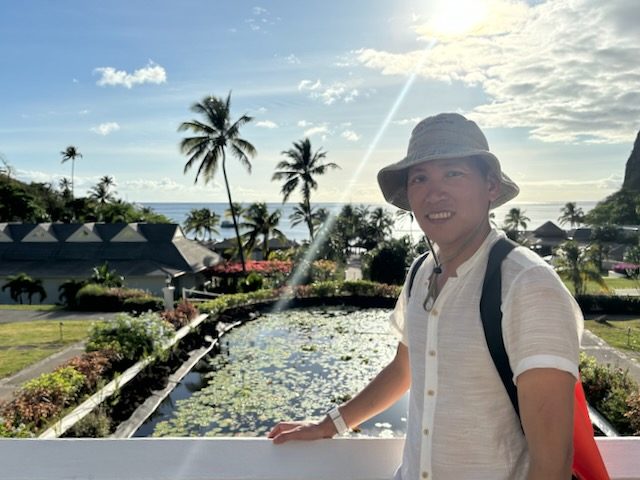
From Grenada, they island-hopped north through the Grenadines — Bequia, Mayreau, Union Island — then up through St. Vincent, St. Lucia, Martinique, Dominica, Guadeloupe, Antigua, St. Kitts, and on to St. Martin. The final leg took them through the British Virgin Islands and into the US Virgin Islands at St. Thomas. Seventeen islands, each with its own character, culture, and flavor.
Each island brought its own culture. The Caribbean's colonial history means languages shift from island to island — Spanish, English, French — and the food culture changes with them. Rum was the constant. Kawabata recalls buying big bottles of Coca-Cola and rum and mixing them every night aboard. "The rum is different on every island. They mix it with Coke on board."
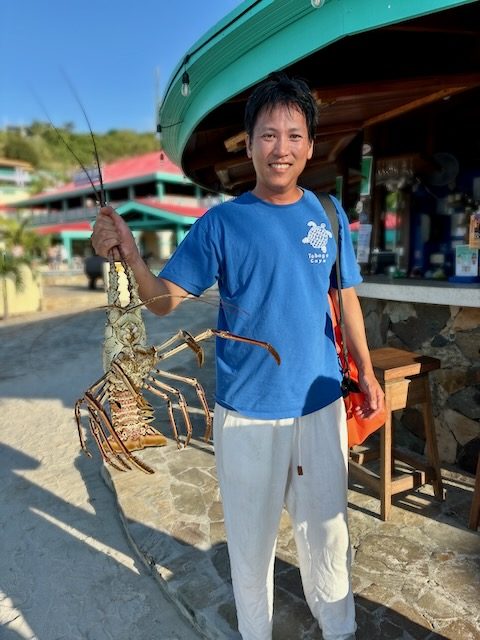
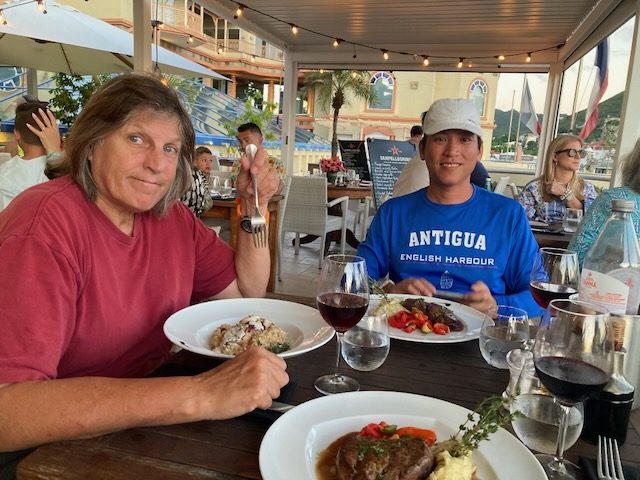
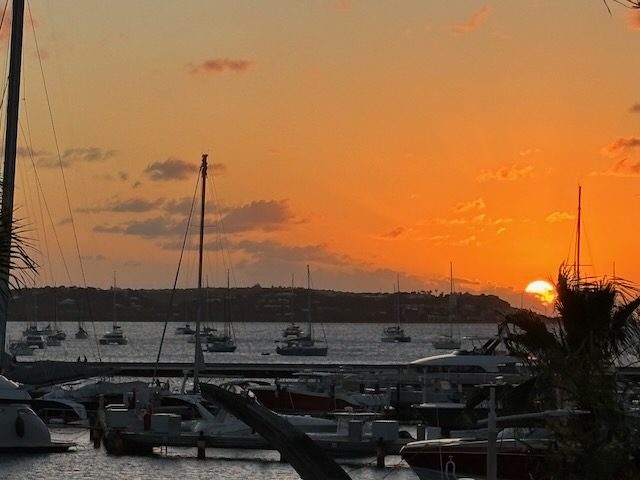
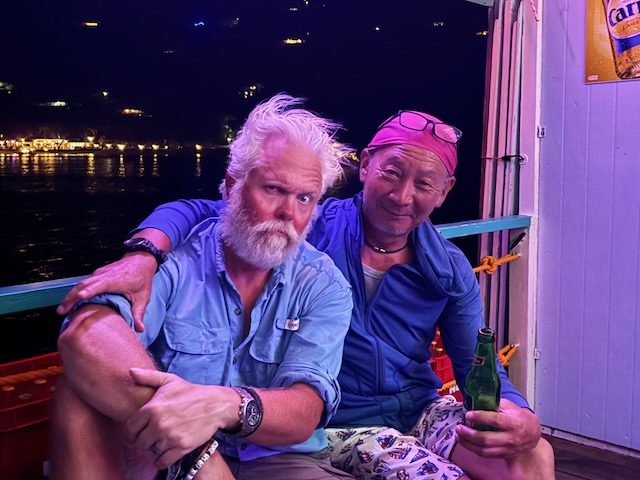
Favorite stops included the floating bars of Bequia, where anchored sailors gather at sunset over cold bottles of Piton beer. At each anchorage, locals would paddle out to sell fresh fruit or ferry water to the boat. In the BVI, they met a group of Americans chartering a catamaran and explored The Baths together over lunch.
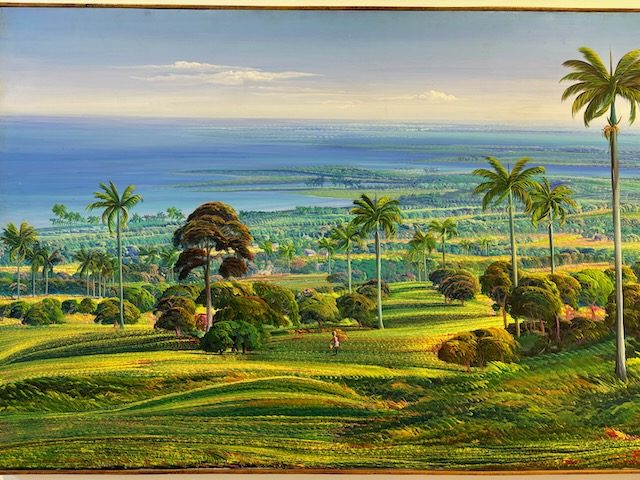
The cruising life wasn't just sailing. Dark View Falls on St. Vincent — a twin waterfall reached by hiking through bamboo groves and tropical rainforest — was a highlight. In Martinique, they explored galleries filled with Caribbean art. And everywhere they went, the hiking was spectacular — ridgelines above turquoise bays, volcanic peaks, and trails that ended at hidden beaches.
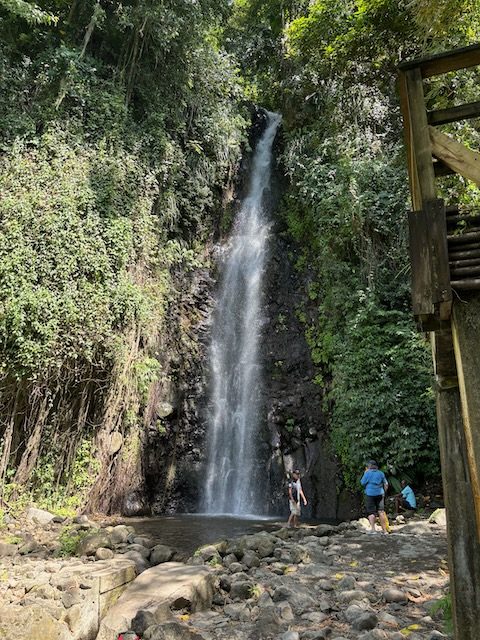

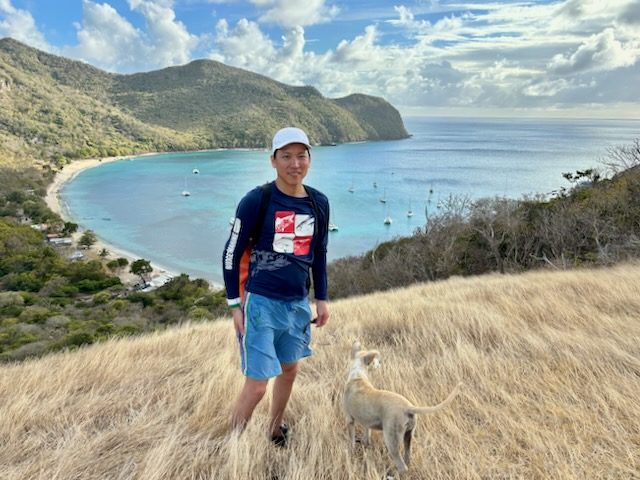
Paul notes the actual cruising wasn't particularly difficult. The main preparations included adding a portable air conditioner for heat, replacing the life raft, and carrying an EPIRB, PLB, and Garmin inReach satellite communicator. He equipped Arona with Starlink for satellite internet — essential for his work as a financial content creator even from remote anchorages.
"The Caribbean is hard to beat. Dry season from November to May means stable weather. The bar for Caribbean cruising isn't as high as you might think." The dream of circumnavigation remains alive. Paul plans to cross the Pacific at minimum, and hopes to return to the Caribbean once more. "The dream of long-distance sailing is far from over."