Hallberg-Rassy 40 · Est. 2004

Sailing Arona

A 40-foot Swedish bluewater yacht sailing the world. From Caribbean island-hopping to the hidden harbours of Japan.

Pitons Bitter End YC Arona deck Waterfall Sunset Bay hike

Our Story

Born to cross oceans

Arona is a US-flagged Hallberg-Rassy 40 — one of 162 ever built — designed by the legendary Germán Frers and crafted at Hallberg-Rassy's Ellös yard in Sweden. She was purchased in Grenada in 2019 with a singular dream: to sail around the world.

Equipped for true offshore passages with windvane self-steering, a full suit of six sails, insulated hull for high-latitude cruising, and modern electronics alongside traditional navigation, Arona blends old-world seamanship with contemporary reliability.

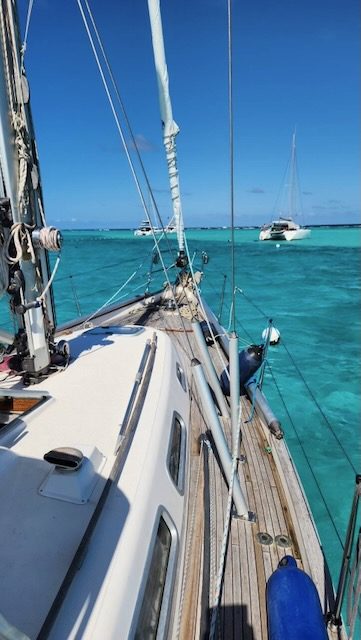
SV Arona — bow and teak deck in turquoise Caribbean waters

The Boat

Hallberg-Rassy 40

Designed by Germán Frers. GRP construction with lead ballast. A proven offshore hull with the tankage, comfort, and quality to call home for a decade at sea.

40.68ft
Length Overall
34.78ft
Waterline Length
12.53ft
Beam
6.53ft
Draft
22,046lb
Displacement
9,039lb
Ballast (Lead)
870ft²
Sail Area
6sails
Full Wardrobe
55hp
Volvo Penta D2-55
800nm
Range Under Power
118gal
Fuel Capacity
122gal
Water Capacity
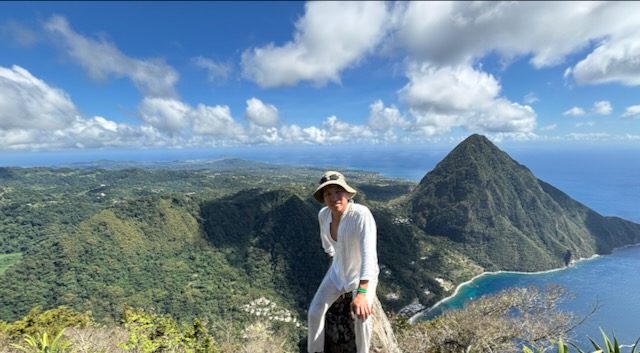
St. Lucia hilltop view
Featured in Kazi Magazine · January 2025

40 Days of Island
Hopping the Caribbean

March–April 2024. Three crew, 600 nautical miles, 17 islands — from Grenada to the US Virgin Islands aboard Arona.

600
Nautical Miles
40
Days at Sea
17
Islands Visited
3
Crew Aboard

Toward a Circumnavigation

Paul splits his time between the US and Japan, and started sailing while living in Japan. Ever since he learned, a circumnavigation was always on his mind. He progressed from a Yamaha 30C to an Elan 34 in Japan, then continued sailing in the Pacific Northwest after moving to Seattle. But for the dream of sailing around the world, he needed something bigger.

In 2019, he found a Hallberg-Rassy 40 for sale in Grenada. "Grenada is the best departure and return point for a circumnavigation. The trade winds blow year-round, it's well-suited for cruising, and from there you can ease into the bluewater life." He purchased Arona and began preparing her for the voyage ahead.

Arona's teak deck in turquoise water
Arona anchored in crystal-clear Caribbean waters — teak deck, turquoise sea, and nothing but horizon.

Riding the Trade Winds

The Caribbean cruise was born from a Facebook post. Paul recruited crew — Kawabata, who flew from Japan, and Linda Saza — and the three set off from Grenada on March 3, 2024. Some days they covered as little as 5 miles; others as many as 50. The pattern was simple: anchor in a bay, row the dinghy ashore, explore, eat at local restaurants, meet other cruisers, and move on.

They sailed the western side of the island chain, where the Caribbean's prevailing easterly winds are gentler. "Waves and wind come from the east, so the west side is calmer. But you still get plenty of breeze." Sparkling blue seas, clear skies, and the steady push of the trades carried them north from island to island.

Sailing through the Caribbean — 40 days of trade winds and island hopping aboard Arona.
Bitter End Yacht Club Sunset at anchor

St. Lucia & the Pitons

St. Lucia was one of the most dramatic stops on the entire route. The twin volcanic peaks of the Pitons — Gros Piton and Petit Piton — rise straight out of the Caribbean like green cathedral spires. Paul hiked both, taking in views that stretched across the entire island chain from their summits.

Piton summit view Summit, arms wide Lunch with Piton view
Resort overlooking Caribbean
St. Lucia — lily ponds, palm trees, and the Caribbean stretching to the horizon.

The Route: Grenada to the USVI

From Grenada, they island-hopped north through the Grenadines — Bequia, Mayreau, Union Island — then up through St. Vincent, St. Lucia, Martinique, Dominica, Guadeloupe, Antigua, St. Kitts, and on to St. Martin. The final leg took them through the British Virgin Islands and into the US Virgin Islands at St. Thomas. Seventeen islands, each with its own character, culture, and flavor.

Arona under way in the Caribbean.

Island Life & Local Flavor

Each island brought its own culture. The Caribbean's colonial history means languages shift from island to island — Spanish, English, French — and the food culture changes with them. Rum was the constant. Kawabata recalls buying big bottles of Coca-Cola and rum and mixing them every night aboard. "The rum is different on every island. They mix it with Coke on board."

Caribbean lobster Dinner in Antigua

Favorite stops included the floating bars of Bequia, where anchored sailors gather at sunset over cold bottles of Piton beer. At each anchorage, locals would paddle out to sell fresh fruit or ferry water to the boat. In the BVI, they met a group of Americans chartering a catamaran and explored The Baths together over lunch.

Night on the floating bar Caribbean art

Exploring Ashore

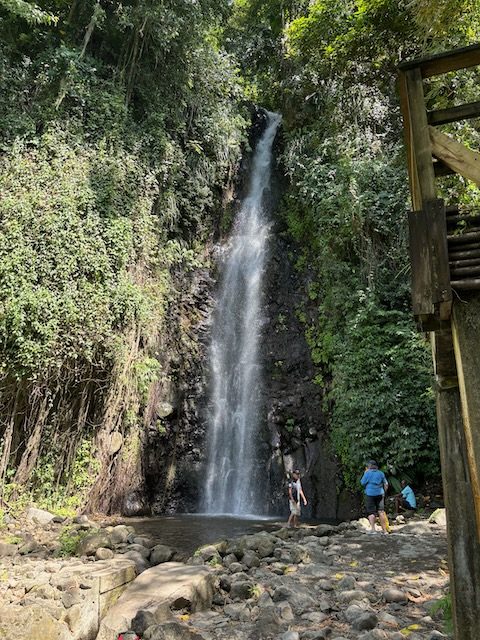
The cruising life wasn't just sailing. Dark View Falls on St. Vincent — a twin waterfall reached by hiking through bamboo groves and tropical rainforest — was a highlight. In Martinique, they explored galleries filled with Caribbean art. And everywhere they went, the hiking was spectacular — ridgelines above turquoise bays, volcanic peaks, and trails that ended at hidden beaches.

Dark View Falls Jungle trail
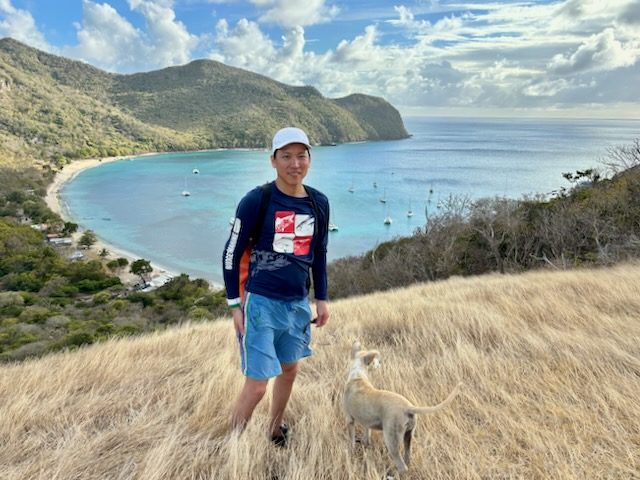
Hiking above Caribbean bay
Hiking above a turquoise bay — the kind of anchorage you only find by boat.

Safety & the Road Ahead

Paul notes the actual cruising wasn't particularly difficult. The main preparations included adding a portable air conditioner for heat, replacing the life raft, and carrying an EPIRB, PLB, and Garmin inReach satellite communicator. He equipped Arona with Starlink for satellite internet — essential for his work as a financial content creator even from remote anchorages.

"The Caribbean is hard to beat. Dry season from November to May means stable weather. The bar for Caribbean cruising isn't as high as you might think." The dream of circumnavigation remains alive. Paul plans to cross the Pacific at minimum, and hopes to return to the Caribbean once more. "The dream of long-distance sailing is far from over."

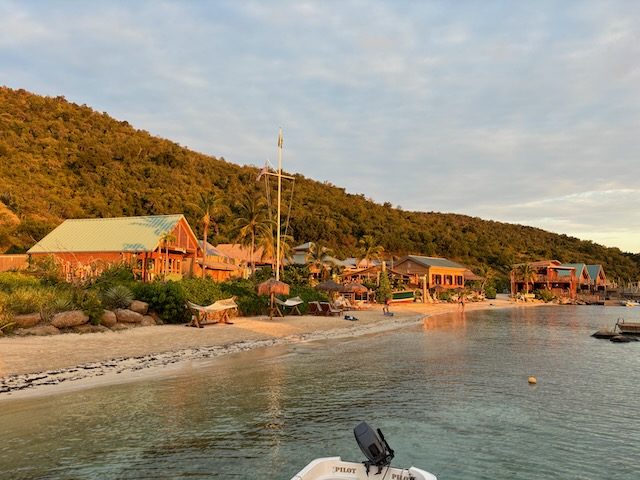
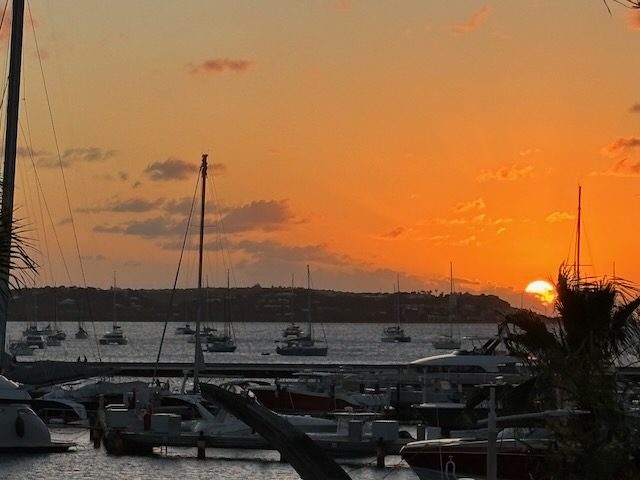
Marina sunset
Golden hour over the marina — the Caribbean delivers sunsets like nowhere else.

Free Download

Sailing Japan:
Secrets of Japanese Waters

The complete cruising guide to Japan — from the Ryukyu Islands to Hokkaido. Second Edition, March 17, 2026.

By Paul Tsai
Second Edition · March 17, 2026
English 中文版 한국어 Français

About This Guide

Japan is one of the world's great undiscovered cruising destinations — an archipelago of nearly 7,000 islands stretching 3,000 kilometres from subtropical Okinawa to the wilderness of Hokkaido. Yet remarkably few foreign yachts venture into Japanese waters, and until now there has been no comprehensive English-language guide for those who do.

Sailing Japan: Secrets of Japanese Waters fills that gap. Drawing on years of personal experience sailing in Japan and fluency in Japanese, this guide covers everything a cruising sailor needs to navigate the country's waters with confidence: clearance formalities and the Naikosen permit system, region-by-region harbour and anchorage information, navigation in the powerful tidal straits of the Seto Inland Sea, typhoon strategy, provisioning, cultural etiquette, and the unique Umi-no-Eki sea station network that most foreign sailors have never heard of.

What's Inside

The guide is organized into eight regional chapters covering Okinawa and the Ryukyu Islands, Kyushu, Shikoku, South Honshu, North Honshu, and Hokkaido — plus six practical appendices including a Japanese language guide for sailors, emergency contacts, a marina directory, recommended typhoon anchorages, cruising budget breakdowns, and a complete Umi-no-Eki directory.

Each regional chapter includes port-by-port coverage with moorage options, shore-side facilities, local highlights, passage planning notes, and food and cultural recommendations. Whether you're planning a two-week cruise of the Seto Inland Sea or a full circumnavigation of the archipelago, this guide gives you the practical information to make it happen.

8 Regional Chapters
Okinawa · Kyushu · Shikoku · South Honshu · North Honshu · Hokkaido — with passage planning, food, and culture for each region.
6 Practical Appendices
Japanese for sailors · Emergency contacts · Budget planning · Typhoon anchorages · Marina directory · Umi-no-Eki directory.
Formalities & Permits
Step-by-step clearance procedures, ports of entry, the Naikosen coastal permit, and the Closed Port permit explained.
Navigation & Tides
Charting options, tidal current strategy for the Seto Inland Sea straits, the Kuroshio Current, and fishing net hazards.

I welcome feedback and corrections — they'll be incorporated into future editions. If you've sailed in Japan, I'd also love to include your photos in upcoming versions. Please reach out through the contact page.

About the Captain

Paul Tsai

Engineer. Sailor. Finance professional.

Paul Tsai is a dual citizen of the United States and Taiwan with an extensive career in finance and international markets. A UCLA-trained Mechanical Engineer and Carnegie Mellon MBA, Paul Tsai applies a rigorous, systems-based approach to the complexities of maritime logistics.

His engagement with Japan began at age 10, sparking a lifelong connection that included time as an exchange student at Tokyo University's School of Engineering. Now a Permanent Resident of Japan with over 40 years of deep cultural and technical experience, Paul Tsai possesses native-level fluency in English, Japanese, and Mandarin Chinese. This unique background allows him to navigate the intricate legal and social nuances of the Japanese harbor system with the precision of an engineer and the insight of a local.

Paul Tsai's sailing journey began in Japan on a Yamaha 30C, eventually exploring the rugged coastlines of the Japanese islands before sharpening his skills in the demanding waters of the Pacific Northwest. In 2019, he purchased Arona — a Hallberg-Rassy 40 — to begin a circumnavigation.

Drawing on his engineering precision, his MBA's analytical framework, and four decades of Japanese immersion, he authored Sailing Japan: Secrets of Japanese Waters, the first comprehensive English-language logistical guide to the region.

When he's not aboard Arona, Paul Tsai writes for Diamond Financial Research and appears on financial media like StockVoice and PIVOT. The dream of a full circumnavigation remains very much alive.

Featured in Kazi Magazine

Paul Tsai's Caribbean cruise aboard Arona was featured in Kazi (舵), one of Japan's most respected sailing magazines, in the January 2025 issue.

Kazi article page 1 Kazi article page 2 Kazi article page 3 Kazi article page 4 Kazi article page 5

Get in Touch

Contact

Questions about the Japan cruising guide, sailing, or Arona? Drop a message below.

Up to 10MB per file. JPG, PNG, or HEIC.