Arona is a US-flagged Hallberg-Rassy 40 — one of 162 ever built — designed by the legendary Germán Frers and crafted at Hallberg-Rassy's Ellös yard in Sweden. She was purchased in Grenada in 2019 with a singular dream: to sail around the world.
Equipped for true offshore passages with windvane self-steering, a full suit of six sails, insulated hull for high-latitude cruising, and modern electronics alongside traditional navigation, Arona blends old-world seamanship with contemporary reliability.
The Boat
Hallberg-Rassy 40
Designed by Germán Frers. GRP construction with lead ballast. A proven offshore hull with the tankage, comfort, and quality to call home for a decade at sea.
March–April 2024. Three crew, 600 nautical miles, 17 islands — from Grenada to the US Virgin Islands aboard Arona.
600
Nautical Miles
40
Days at Sea
17
Islands Visited
3
Crew Aboard
Toward a Circumnavigation
Paul started sailing while living in Japan, and ever since he learned, a circumnavigation was always on his mind. He progressed from a Yamaha 30C to an Elan 34 in Japan, then after moving to Seattle in 2017, upgraded to a trailerable MacGregor 26. But for the dream of sailing around the world, he needed something bigger.
In 2019, he found a Hallberg-Rassy 40 for sale in Grenada. "Grenada is the best departure and return point for a circumnavigation. The trade winds blow year-round, it's well-suited for cruising, and from there you can ease into the bluewater life." He purchased Arona and began preparing her for the voyage ahead.
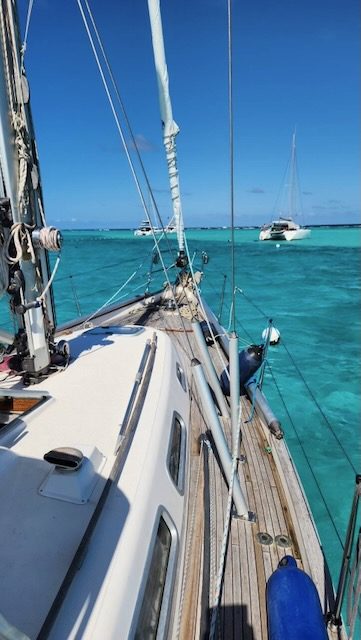
Arona anchored in crystal-clear Caribbean waters — teak deck, turquoise sea, and nothing but horizon.
Riding the Trade Winds
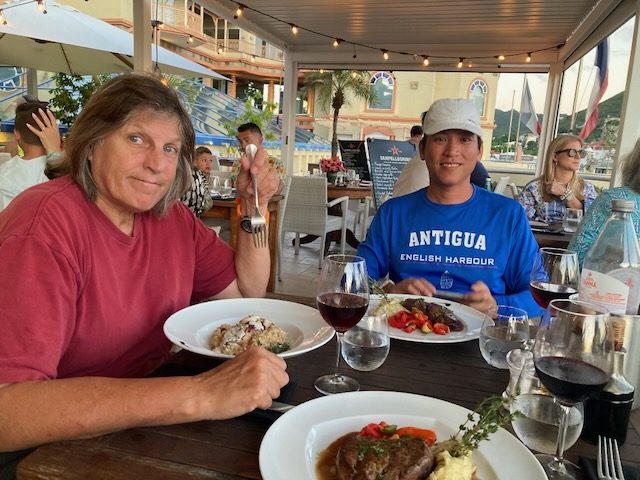
The Caribbean cruise was born from a Facebook post. Paul recruited crew — Kawabata, who flew from Japan, and left-seat Linda — and the three set off from Grenada on March 3, 2024. Some days they covered as little as 5 miles; others as many as 50. The pattern was simple: anchor in a bay, row the dinghy ashore, explore, eat at local restaurants, meet other cruisers, and move on.
They sailed the western side of the island chain, where the Caribbean's prevailing easterly winds are gentler. "Waves and wind come from the east, so the west side is calmer. But you still get plenty of breeze." Sparkling blue seas, clear skies, and the steady push of the trades carried them north from island to island.
Sailing through the Caribbean — 40 days of trade winds and island hopping aboard Arona.
St. Lucia & the Pitons
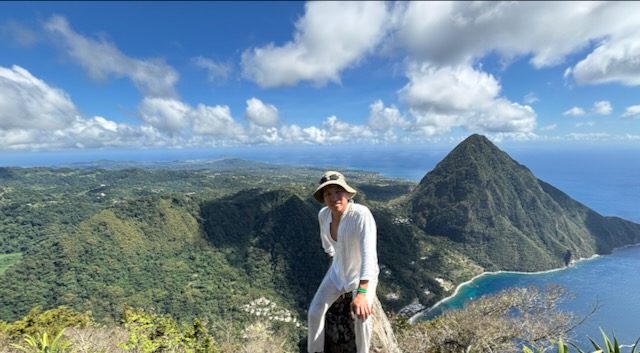
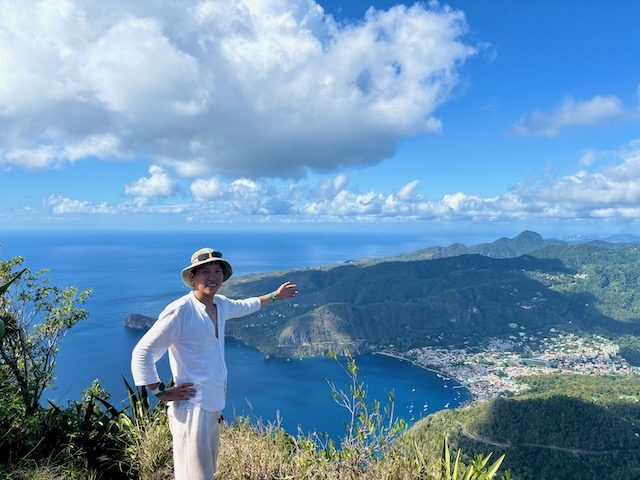
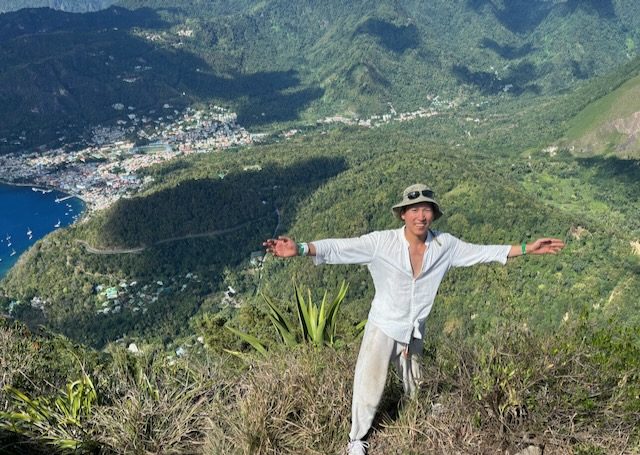
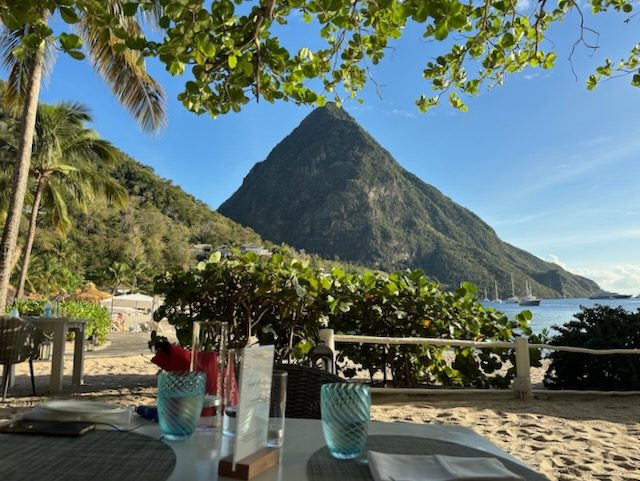
St. Lucia was one of the most dramatic stops on the entire route. The twin volcanic peaks of the Pitons — Gros Piton and Petit Piton — rise straight out of the Caribbean like green cathedral spires. Paul hiked both, taking in views that stretched across the entire island chain from their summits.
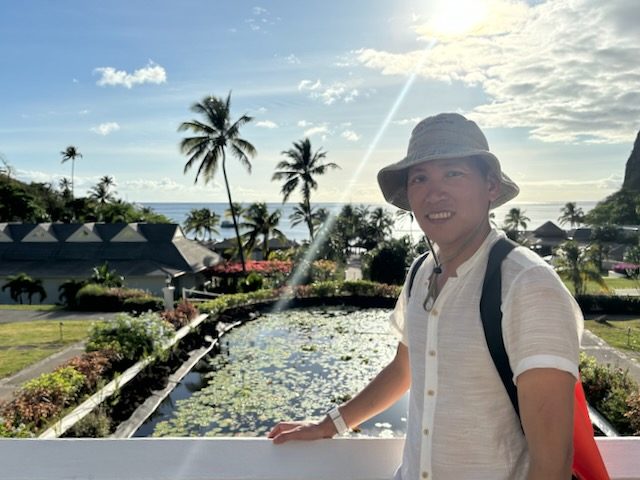
St. Lucia — lily ponds, palm trees, and the Caribbean stretching to the horizon.
The Route: Grenada to the USVI
From Grenada, they island-hopped north through the Grenadines — Bequia, Mayreau, Union Island — then up through St. Vincent, St. Lucia, Martinique, Dominica, Guadeloupe, Antigua, St. Kitts, and on to St. Martin. The final leg took them through the British Virgin Islands and into the US Virgin Islands at St. Thomas. Seventeen islands, each with its own character, culture, and flavor.
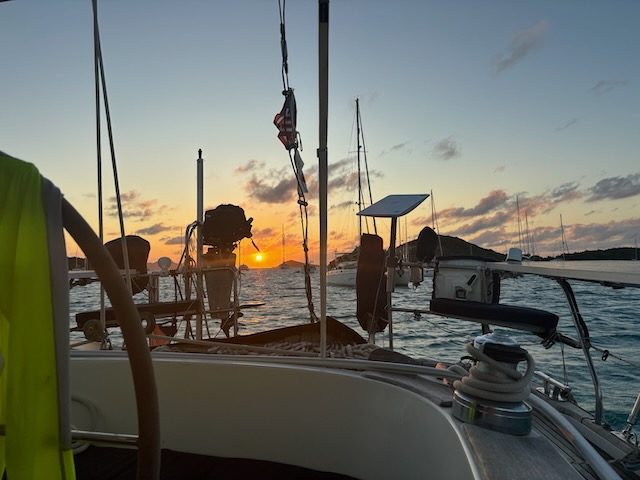
Arona under way in the Caribbean.
Island Life & Local Flavor
Each island brought its own culture. The Caribbean's colonial history means languages shift from island to island — Spanish, English, French — and the food culture changes with them. Rum was the constant. Kawabata recalls buying big bottles of Coca-Cola and rum and mixing them every night aboard. "The rum is different on every island. They mix it with Coke on board."
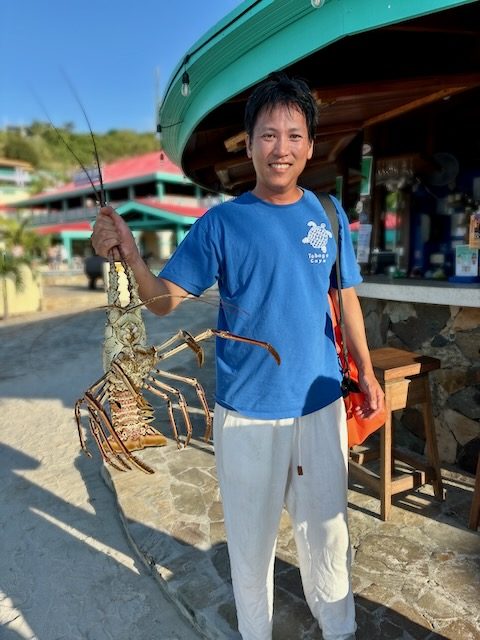
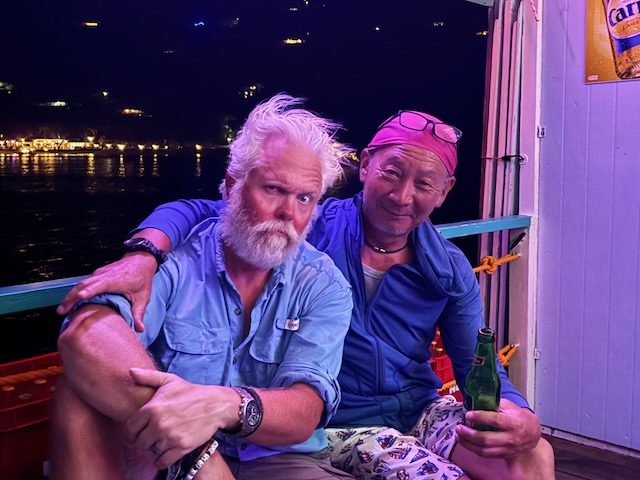
Favorite stops included the floating bars of Bequia, where anchored sailors gather at sunset over cold bottles of Piton beer. At each anchorage, locals would paddle out to sell fresh fruit or ferry water to the boat. In the BVI, they met a group of Americans chartering a catamaran and explored The Baths together over lunch.
Exploring Ashore
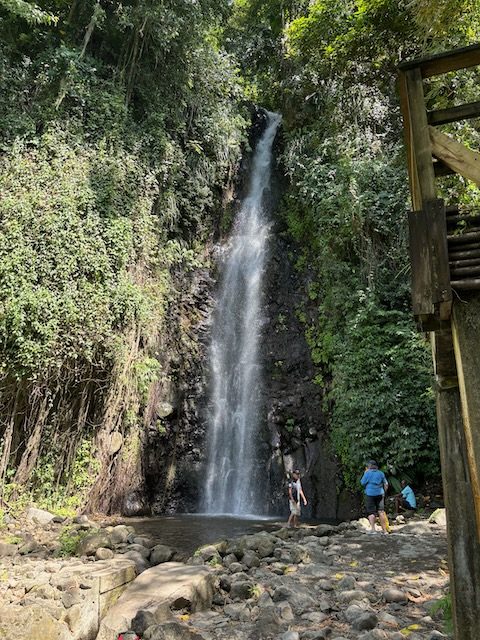
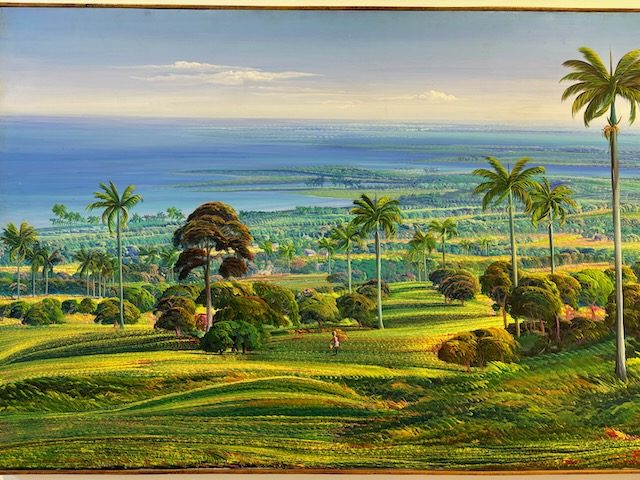
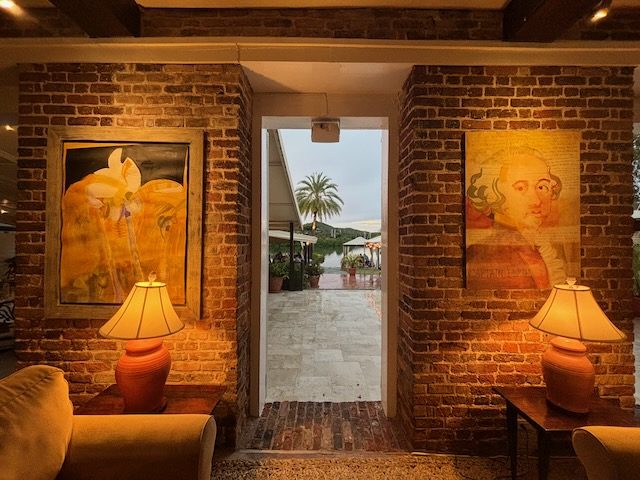
The cruising life wasn't just sailing. Dark View Falls on St. Vincent — a twin waterfall reached by hiking through bamboo groves and tropical rainforest — was a highlight. In Martinique, they explored galleries filled with Caribbean art. And everywhere they went, the hiking was spectacular — ridgelines above turquoise bays, volcanic peaks, and trails that ended at hidden beaches.
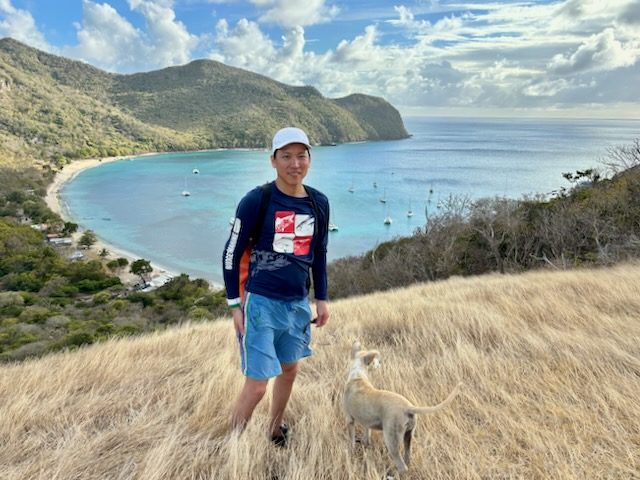
Hiking above a turquoise bay — the kind of anchorage you only find by boat.
Safety & the Road Ahead
Paul notes the actual cruising wasn't particularly difficult. The main preparations included adding a portable air conditioner for heat, replacing the life raft, and carrying an EPIRB, PLB, and Garmin inReach satellite communicator. He equipped Arona with Starlink for satellite internet — essential for his work as a financial content creator even from remote anchorages.
"The Caribbean is hard to beat. Dry season from November to May means stable weather. The bar for Caribbean cruising isn't as high as you might think." The dream of circumnavigation remains alive. Paul plans to cross the Pacific at minimum, and hopes to return to the Caribbean once more. "The dream of long-distance sailing is far from over."
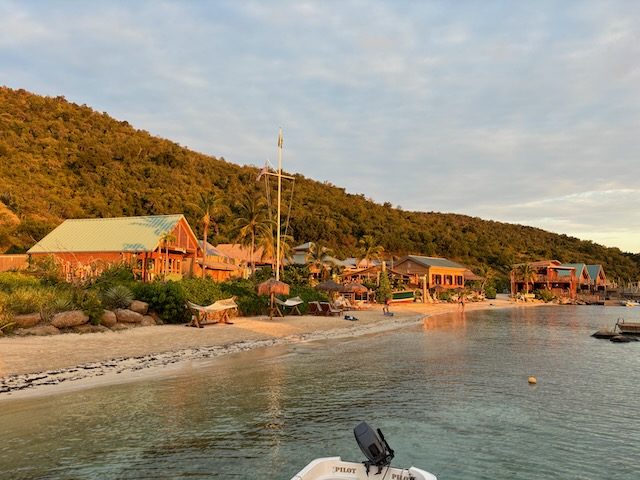
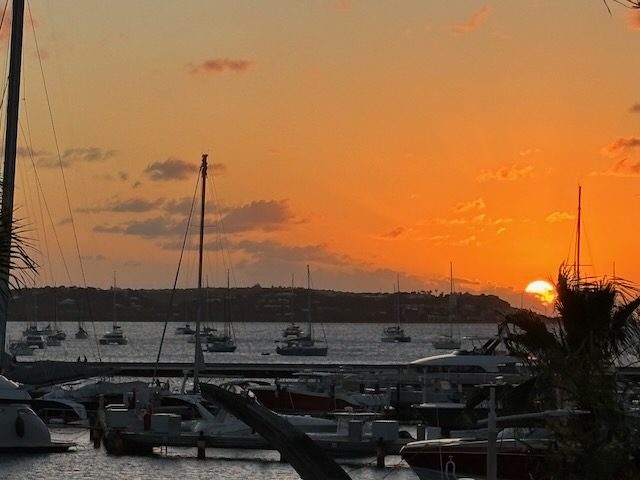
Golden hour over the marina — the Caribbean delivers sunsets like nowhere else.
The Plan
A 10-year circumnavigation in four chapters
After years of preparation, Arona is entering her final refit phase. Two shakedown seasons will prove every system before heading offshore for the voyage of a lifetime.
2026
Winter
The Refit
Arona's comprehensive offshore refit at her home port in the Pacific Northwest. Every system will be inspected, rebuilt, or replaced to bluewater specification.
Complete electrical system rewire
Windlass replacement
New standing rigging inspection
Safety systems upgrade — liferaft, EPIRB, jacklines
Starlink satellite internet installation
Hull antifouling and underwater inspection
2027
Summer
Shakedown I — Haida Gwaii
First shakedown through British Columbia's remote archipelago. Haida Gwaii sits exposed on the edge of the North Pacific — challenging conditions that will test every system aboard in cold water, strong currents, and unpredictable weather.
Open-ocean crossing from Vancouver Island
Anchoring in remote, uncharted bays
Testing self-sufficiency systems and provisioning
Validating windvane self-steering offshore
2028
Summer
Shakedown II — Southeast Alaska
Second season pushing north through the Inside Passage to Southeast Alaska. Longer range, colder water, bigger tides. This is the final proving ground — if Arona and crew can handle Alaska, they can handle anything.
Extended cruising through the Inside Passage
Glacier Bay and remote Alaskan anchorages
Long-range fuel and water management
Cold-weather gear and systems validation
2029
Spring
Departure — The Circumnavigation Begins
Spring departure from the Pacific Northwest. South down the coast, across to the South Pacific, and into the trade winds. The plan is a westward circumnavigation following the traditional trade wind route, with the flexibility to linger where the sailing — and the living — is good.
PNW → Mexico → South Pacific
French Polynesia, Fiji, New Zealand
Southeast Asia, Indian Ocean, Red Sea
Mediterranean, Atlantic, Caribbean, and home
Planned Route
Seattle
PNW
→
Mexico
Pacific
→
Marquesas
S. Pacific
→
Fiji
S. Pacific
→
New Zealand
S. Pacific
→
SE Asia
Indian Ocean
→
Red Sea
Indian Ocean
→
Med
Europe
→
Caribbean
Atlantic
→
Home
PNW
The Hallberg-Rassy 40 was built for exactly this kind of voyage — insulated hull for high latitudes, 118-gallon fuel and 122-gallon water tanks for long passages, and a proven Germán Frers hull design that has crossed every ocean. With her 800-nautical-mile range under power, Arona can reach any harbor on earth.
Ship's Log
From the helm
Dispatches from Arona — updates from the water, refit progress, and the road to circumnavigation.
Everything we used (and wished we'd known) while cruising 600 miles from Grenada to the USVI aboard Arona. Compiled from 40 days of island hopping.
⚓
Route Strategy
The classic Caribbean island-hopping route runs south to north — start in Grenada and work your way up the chain to the Virgin Islands. This lets you ride the prevailing easterly trade winds with eased sheets for most of the trip, rather than beating upwind the entire way. Veteran cruiser Don Street has been advocating this approach for decades.
Sail the west (leeward) side of the islands. The wind and waves come from the east, so the western shores are calmer — gentler seas, better anchorages, and easier landings. Hug the coast when passing between islands, and time your channel crossings with the current when possible.
Arona's Route: Grenada → Carriacou → Union Island → Mayreau → Bequia → St. Vincent → St. Lucia → Martinique → Dominica → Guadeloupe → Antigua → St. Kitts → St. Martin → BVI → USVI (St. Thomas). 600nm over 40 days — some days 5 miles, others 50.
🌤
Weather & Season
The dry season runs from November to May — this is prime cruising time. Trade winds blow a steady 15–25 knots from the east, skies are clear, and hurricane risk is essentially zero. We sailed March–April and the conditions were ideal.
Hurricane season runs June through November, with peak activity in August–October. Most cruisers either haul out or head south of Grenada (latitude 12°N) which sits below the traditional hurricane belt.
PredictWindThe gold standard for passage planning. Weather routing, departure planning, GRIB downloads, and multi-model forecasts. Paid plans are worth it for offshore work.WindyBeautiful visual wind, wave, and pressure maps. Free. Great for getting a quick snapshot of conditions across the Caribbean basin.NOAA National Hurricane CenterOfficial tropical weather outlook and storm tracking. Essential during hurricane season.
🗺
Navigation & Charts
Electronic charts are essential, but always cross-reference. Caribbean reefs, rocks, and shoals aren't always accurately charted — eyeball navigation in good light is still critical, especially when entering unfamiliar anchorages. We used a combination of apps on iPad as backup to the onboard chart plotter.
Navionics BoatingPrimary chart app for most cruisers. Auto-routing based on your draft, ActiveCaptain community data, tide/current overlays. Yearly subscription is cheap compared to plotter chips.NavilyCrowdsourced anchorage reviews with photos, wind protection angles, seabed type, and facilities. Huge active user base — essential for finding the good spots.NoForeignLandThe cruiser's Google Maps. Crowdsourced info on anchorages, dinghy docks, water fills, cooking gas, and more. Free, ad-free, community supported.ActiveCaptainGarmin's community layer for marinas, hazards, and anchorages. Integrates with Navionics charts. User reviews and photos of docks and approaches.
📖
Guides & Publications
Paper guides still matter. Chris Doyle's cruising guides are the bible for the Eastern Caribbean — pick up the relevant volume before you go. Imray charts (B31, B32, B311 for the Grenadines and Windwards) are excellent for annotation and planning.
Chris Doyle's Cruising GuidesThe definitive guide to the Windward and Leeward Islands. Detailed anchorage info, pilotage notes, restaurant recommendations. Updated regularly.Cruising Guide PublicationsComprehensive guides for the Virgin Islands (BVI/USVI) with waypoints, charts, and shore-side info.Caribbean CompassFree monthly newspaper covering regional cruising news, routes, first-person accounts, and marine industry. Available at marinas throughout the islands.All At SeaCaribbean waterfront community publication. Cruising stories, marine industry news, and itinerary ideas.
📡
Cruiser Community & Comms
The cruising community in the Caribbean is tight and incredibly helpful. Morning cruiser nets on VHF share weather, security updates, and local tips. Facebook groups are the go-to for real-time intelligence on conditions, customs procedures, and island-specific advice.
VHF Nets: Grenada Cruisers Net — VHF Ch.66 at 07:30 daily (Mon–Sat). Carriacou — VHF Ch.69. Caribbean Safety & Security Net — SSB 8104.0 USB at 08:15 daily. These are essential for weather briefs, security alerts, and connecting with nearby boats.
🛰
Connectivity & Communications
Staying connected while cruising has gotten dramatically easier. We equipped Arona with Starlink for satellite internet — it was a game-changer for both work and weather routing. For safety, we carried redundant satellite communication.
StarlinkSatellite internet at broadband speeds. Works offshore and in remote anchorages. The roaming plan covers the Caribbean. Essential for working remotely from the boat.Garmin inReachTwo-way satellite messenger with SOS. Works anywhere on earth. We carried this as primary emergency communication alongside the EPIRB.
Arona's Safety Kit: EPIRB (registered), PLB (personal), Garmin inReach satellite communicator, Starlink, VHF radio, SSB radio. Redundancy is the point — if one system fails offshore, you need a backup.
🏝
Island Highlights from Arona's Route
Grenada
The "Spice Island" and our home port. Best departure point for a northbound cruise. Don't miss the underwater sculpture park at Molinere Point, Grand Anse Beach, and the River Antoine Rum Distillery — the oldest water-powered distillery in the Caribbean.
The Grenadines
Tobago Cays is the jewel — swim with sea turtles inside the horseshoe reef. Bequia has the best floating bars and friendliest locals. Mayreau's Salt Whistle Bay is one of the most beautiful anchorages in the world.
St. Vincent
Dark View Falls is spectacular — a twin waterfall reached through bamboo and rainforest. Grab a mooring at Young Island Cut for easy access ashore.
St. Lucia
Hike the Pitons — both Gros and Petit if you're fit. The views from the summits are unforgettable. Soufrière has the best restaurants and the volcanic mud baths are worth the detour. Rodney Bay in the north has the best marine services.
Martinique
French culture, incredible food, and beautiful galleries. Le Marin is the most popular base for cruising yachts with full marine services. Stock up on French wine and cheese — it's European prices.
Antigua
English Harbour and Nelson's Dockyard — the historic heart of Caribbean sailing. Great restaurants, a lively cruiser scene, and Antigua Sailing Week if you're there in late April.
British Virgin Islands
The Baths on Virgin Gorda — giant granite boulders forming grottoes and pools. Bitter End Yacht Club for sundowners. Short hops between islands in calm, protected waters — perfect sailing.
US Virgin Islands
St. Thomas for provisioning and clearing customs. Charlotte Amalie has the historic Fort Christian and duty-free shopping. St. John's National Park beaches (Trunk Bay, Cinnamon Bay) are worth the day trip.
💡
Practical Tips from 40 Days Aboard
Customs & Immigration
You must clear in and out of every country. Bring all passports. Have cash in local currency (EC dollars in the Windwards). Most offices close at 16:00 — plan arrivals accordingly. Overtime fees apply on weekends.
Provisioning
Stock up in Grenada and Martinique where prices are best. Fresh produce is available from "boat boys" at most anchorages. Rum is cheap everywhere — buy local. Water and fuel are available at most marinas but carry extra on passages.
Heat & Comfort
It's hot. We added a portable AC unit for sleeping — it was the single best comfort upgrade. Good ventilation (hatches, wind scoops, fans) matters enormously. Anchor for the breeze, not just the view.
Currents
Caribbean currents are real — especially around Grenada where you can have 3 knots against you if you time it wrong. Check tides before channel crossings. The westward-flowing current in the passages between islands can set you off course.
Dinghy & Shore
Your dinghy is your car. Lock it always. Dinghy docks are available at most towns and marinas. At remote anchorages, beach the dinghy and use a stern anchor to keep it off the rocks.
Budget
Eating out at local restaurants is surprisingly affordable. Marina fees vary widely — anchoring is free in most bays. Biggest expenses: fuel, customs fees, eating ashore, and the occasional mooring ball. Rum is cheap. That helps.